
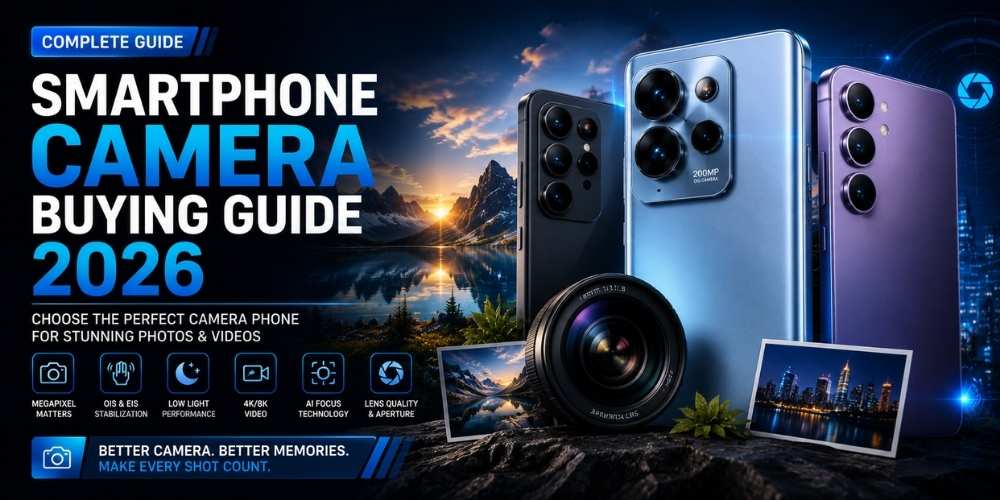
Smartphone Camera Buying Guide for 2026
A practical guide to comparing phone cameras beyond megapixel marketing.
Key Takeaways
- Do not buy based on megapixels alone.
- Compare main, ultrawide, telephoto, selfie, and video performance.
- Look for consistent color and exposure across lenses.
- Use real-world samples that match your photography habits.
Megapixels Are Only One Part of the Camera
Megapixels describe image resolution, but they do not guarantee better photos.
Sensor size, pixel design, lens quality, stabilization, autofocus, processing, and exposure decisions all matter.
A lower-resolution camera with strong processing can outperform a higher-resolution camera in difficult conditions.
Main, Ultrawide, and Telephoto Cameras
The main camera usually delivers the best overall quality because it receives the most engineering attention.
Ultrawide cameras are useful for architecture, landscapes, and group photos, but edge quality can vary.
Telephoto cameras improve portraits and distant subjects. Compare optical range, stabilization, and detail rather than relying on large digital zoom numbers.
Low-Light Photography
Low-light quality depends on sensor sensitivity, lens brightness, stabilization, and computational photography.
Night modes can combine multiple frames, but long capture times may blur moving subjects.
Check real samples of people, pets, street scenes, and indoor environments instead of only static night landscapes.
Video Quality
Video requires reliable autofocus, stabilization, exposure transitions, audio quality, and heat control.
High resolution is useful, but consistent frame rates and natural color often matter more.
Creators should also check front-camera video, external microphone support, storage requirements, and editing compatibility.
Image Processing and Consistency
Processing determines color, contrast, skin tones, sharpening, noise reduction, and dynamic range.
The best camera phones produce consistent results across lenses and lighting conditions.
A camera that is predictable is often more valuable than one that occasionally creates a spectacular image.
How to Compare Camera Samples
View full-resolution samples when possible and inspect faces, fine textures, bright highlights, and dark shadows.
Compare the same scene from multiple phones and pay attention to consistency.
Video comparisons should include walking, panning, low light, and changes between lenses.
Practical Buying Checklist
- Define the main problem you want to solve.
- Set a realistic budget including accessories and service costs.
- Compare independent tests instead of relying only on advertising.
- Check warranty, update policy, repair options, and return terms.
- Choose the product or workflow that is easiest to use consistently.
Frequently Asked Questions
How many cameras does a good phone need?
A good phone does not need many cameras. A strong main camera and a useful secondary lens can be better than several low-quality sensors.
Is optical zoom better than digital zoom?
Optical zoom generally preserves more detail because it uses a dedicated lens. Digital zoom relies more heavily on cropping and processing.
What matters most for video?
Stabilization, autofocus, exposure control, audio, heat management, and consistency matter more than resolution alone.
Make Smarter Technology Decisions
Explore more practical buying guides, reviews, security tips, and technology explainers from HoverProTech.
Browse Latest Guides
Ethan Walker is a technology writer at HoverProTech with a passion for smartphones, AI, laptops, software, and consumer electronics. He specializes in product reviews, buying guides, and technology news, helping readers stay informed with accurate, practical, and easy-to-understand content.